Contact form
Non-ferrous
Negative rake for aluminium extrusions and sheet.
For extrusion and sheet setups, start with the blade notes before the saw is loaded. Setup guide covers direction, clamping and bore checks, while Care deals with pitch build-up from aluminium and the right cleaning routine for a 72T neg blade. If you need to flag the stock size, machine type or finish requirement, use our contact form.
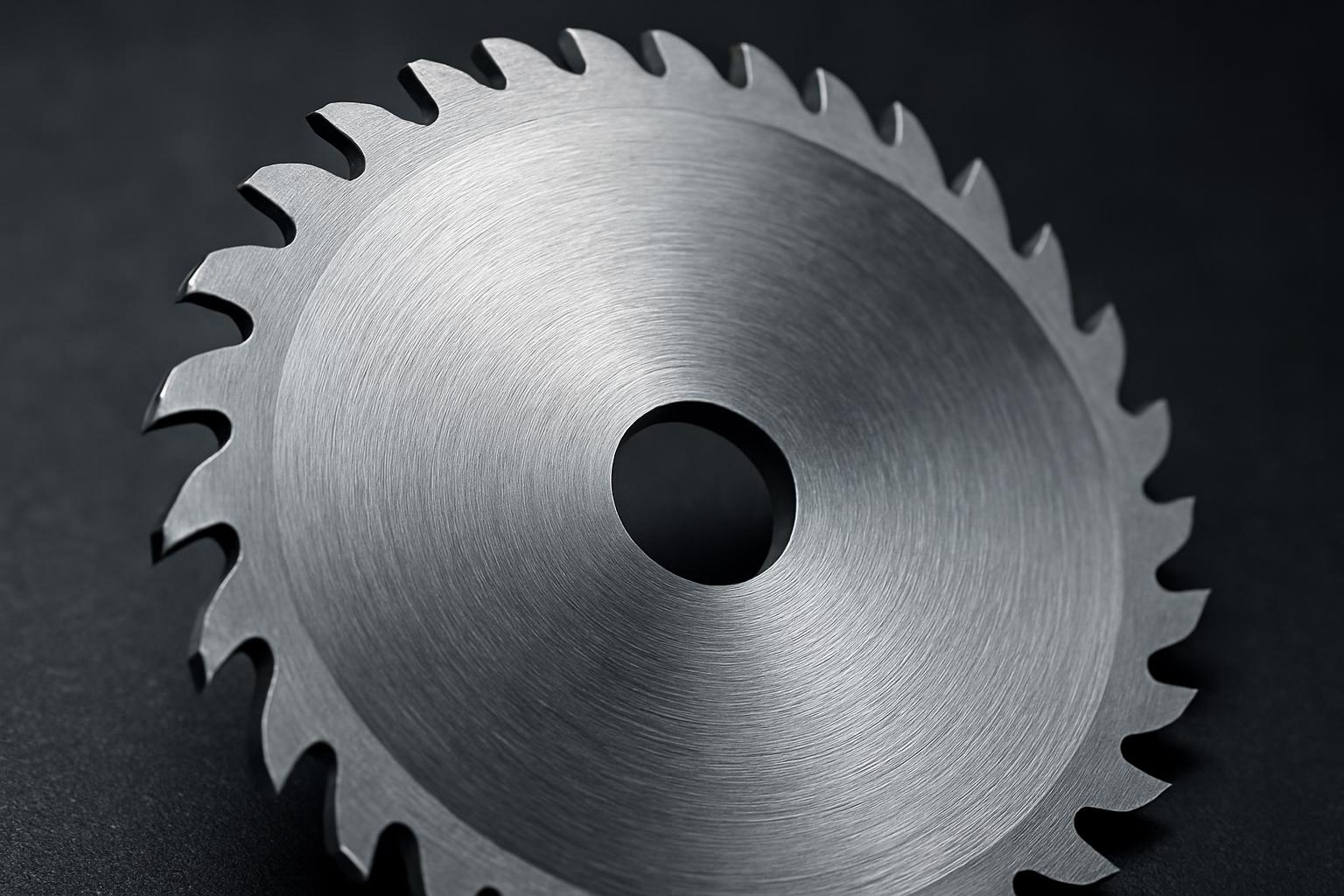
An aluminium blade behaves differently from a timber blade the moment the cut starts. The negative rake helps control grab on hollow sections, flat bar and sheet, especially where light stock can chatter near the fence. On Gauteng saws, a clean arbor and steady feed matter more than forcing speed through a shiny extrusion.
Non-ferrous work uses a 72T neg tooth pattern, 2.6 mm kerf and 30 mm bore. It suits aluminium extrusions and sheet where edge finish counts and the operator wants less self-feeding at entry. Soft jaws are worth fitting before the first clamp mark ruins an anodised face.
Before the production run, make one short test cut and inspect both burr and witness marks. A quick photo of the offcut and the cut edge helps when the same profile comes back next month. Coolant mist is optional here, but it can settle the cut on longer aluminium lengths.
Use this blade path when the job is aluminium rather than mixed material guessing. The key checks are clamp pressure, bore fit, feed consistency and whether the section is thin enough to ring during the cut. For stock-specific guidance beyond the blade itself, follow Materials.
Match the blade to the alloy form before changing machine settings. Box section, plate and thin sheet do not react the same, and Kerfs should be read with the machine setup note so kerf clearance is not assumed. If you use our contact form, include the stock shape, wall thickness, saw type and the blade now on the machine.
Johannesburg dust, Durban humidity and stop-start power all show up in aluminium cutting. Fine grit between flange and blade can spoil an otherwise clean edge, while coastal moisture can stain stock left waiting beside the saw. This blade does its part, but setup discipline still decides the finish.
Inland shops usually need more frequent wipe-downs on the arbor and guards after a dusty morning. Coastal sites should watch for condensation on sheet packs before loading, especially after overnight temperature swings. If the machine shares duties with wood or plastic, clear chips fully before fitting a non-ferrous blade and check that the clamp pads are not carrying embedded debris.
Operated by Astros Marketing (Pty) Ltd from Sunnyrock 1401, with the shop in Kya Sands, Johannesburg.
| Teeth / grind | 72T neg |
|---|---|
| Kerf | 2.6 mm |
| Bore | 30 mm |
| Notes | Clamp soft jaws; coolant mist optional. |
Keep the main numbers visible where the operator can check them at blade change. The basic specification covers aluminium work, with setup and cleaning notes for non-ferrous cutting. For machine-specific queries, use the contact form and name the blade path.
Use our contact form if you need to note the profile, section size or saw model. TrueCut is based in Kya Sands, Johannesburg.
Verified Google reviews