Contact form
Care
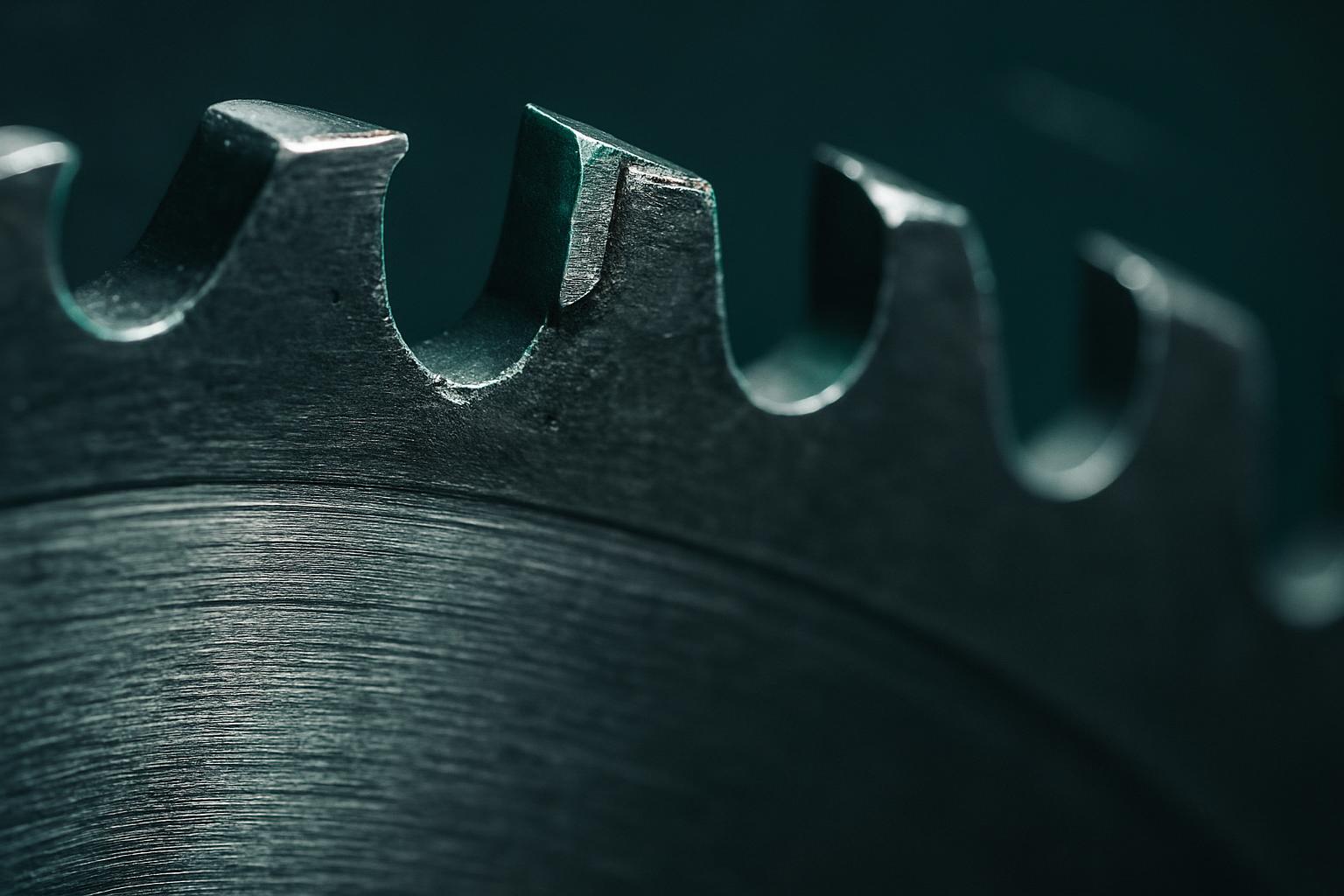
Aluminium Negative Rake blades need clean teeth, dry storage, and a clear decision on regrind versus replacement. Soft aluminium packs into the gullets and around the tips faster than timber dust, especially when coolant wax or cutting spray has been used. Check the plate after each run, store the blade where the teeth cannot knock together, and take it out of service when chipping or wobble starts showing in the cut.
On non-ferrous work, routine care stops built-up aluminium from welding onto the carbide edge. Remove the blade, wipe both faces, and clean the gullets with a suitable blade cleaner and a soft brass or nylon brush. Store it on a rack or in a sleeve with each tooth protected, because one knock on a negative rake tip can mark the next mitre or crosscut.
After a busy run of window section, flat bar, or extrusion, inspect the rim for packed swarf and check whether the bore and flange faces stayed clean during changeover. Each month, confirm arbor fit, flange condition, and the saw's clamping pressure so the blade is not slipping under load. When power interruptions leave a blade hot from repeated restarts, let it cool fully before checking runout or returning to fine aluminium cuts.
Replace the blade when carbide corners break away, when vibration stays after the bore and flange faces are cleaned, or when burrs remain even with the feed rate corrected. Aluminium Negative Rake blades are often worth sharpening while the plate is still flat and the tooth height remains even around the disc. Once gullets show cracking, the body has heat tint near the rim, or the grind has been taken back too far, fit a new blade rather than sending it out again.
Use the contact form if you want a second look at tooth wear, bore size, or flange marks before sending a blade for service. Clear photos of the tips, the bore, and the saw model help place it correctly. See Holders for reducers, blade cases, and storage options that suit non-ferrous saw setups.
Keep Aluminium Negative Rake blades upright on a rack or flat in a protective case, with nothing pressing against the teeth. If a blade is moving between Kya Sands, a site container, and a factory saw, fit a cover so aluminium swarf and steel offcuts cannot nick the cutting edge. For dispatch, include the correct reducer ring and mark the blade size on the package so it is matched to the right machine on arrival.
Operated with Astros Marketing (Pty) Ltd.
Saw details and blade wear questions can be sent through our contact form to the Kya Sands, Johannesburg team.
Verified Google reviews