Contact form
Board goods
Anti-chip grind for melamine and white board.
Use our contact form if you need this blade matched to your saw diameter or scoring set. For arbor fitment and cut direction, see Setup guide. Resin build-up and edge handling are covered under Care.
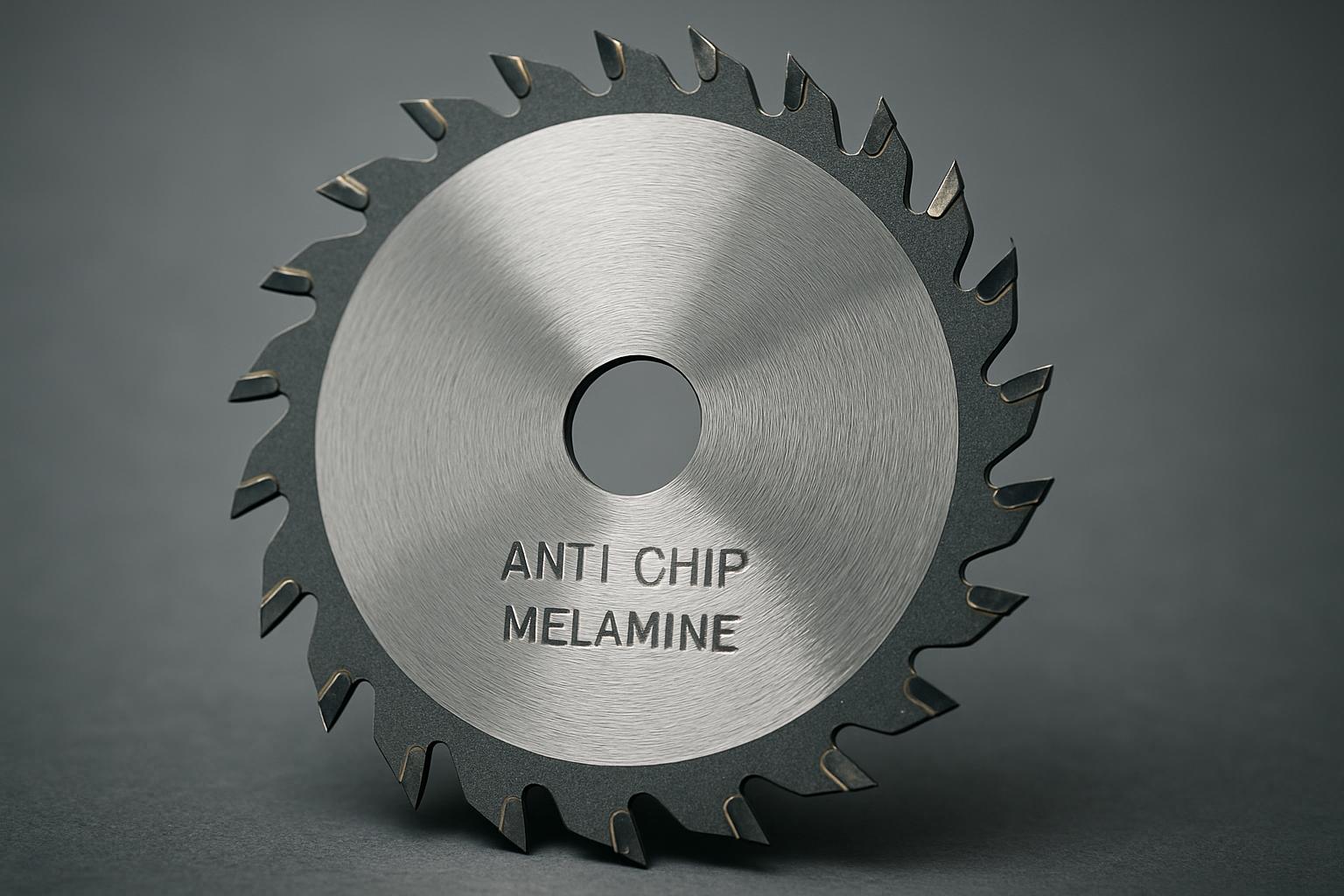
Melamine Anti-Chip is for sheet materials where the top face must stay clean right to the edge. In cabinet and shopfitting work, it is commonly used on white board, double-sided melamine, and similar decorative panels that show breakout immediately. The toothing is chosen to leave a neater exit on brittle surface layers than a general rip or combination blade.
On a 30 mm bore machine, this blade suits panel saws and table saws set up for board cutting rather than heavy timber feeding. The listed 64T and 72T options give a finer finish on melamine-faced stock, with the higher tooth count generally favoured where feed speed is controlled and edge quality matters more than pace. Keep it for board goods only, not mixed in with pine, shutterply, and offcut duties.
Before the first stack goes through, check a sample panel from both faces and mark the show side. If the board is chip-prone, the score cut should be dialled in first so the main blade is not asked to clean up a poor scorer setting. A quick test strip saves full-sheet waste when edging must line up cleanly for PVC or ABS tape.
Set blade height so the tooth projects only enough to clear the panel cleanly without excessive lift on the top laminate. Confirm that the scoring blade tracks the same line if your machine uses one, and compare the finished edge against the panel type listed under Materials. On high-use machines, inspect the pressure beam and side guides as well, because panel movement often looks like blade damage when it is actually handling.
Read the matching note in Kerfs before changing from a standard board blade to this 2.8 mm cut. If you need sizing advice for a panel saw or slider, use our contact form and include the board type, blade diameter, and whether a scorer is fitted. Mention any face chipping on entry or exit, because that points to different setup faults.
Johannesburg dust, coastal moisture, and mixed board batches all affect finish on melamine cuts. Fine-tooth blades show resin and adhesive build-up sooner, especially where wrapped packs stand in humid conditions before cutting. Edge quality on decorative panels depends as much on clean mounting and steady feed as on the grind itself.
Inland workshops often need more frequent flange cleaning because fine dust packs behind the blade and affects runout. Near the coast, let cold sheets come to room condition before precision cutting, as surface moisture can mark and drag on the table. Where power interruptions are common, re-check scorer height and fence reading after restart instead of assuming the previous setting held. Also separate the scoring check from the main blade check when both are adjusted on the same machine.
Operated by Astros Marketing (Pty) Ltd from Sunnyrock 1401, with the shop in Kya Sands, Johannesburg.
| Teeth / grind | 64T / 72T |
|---|---|
| Kerf | 2.8 mm |
| Bore | 30 mm |
| Notes | Score first on chip-prone faces. |
Melamine panel cutting calls for 64T or 72T toothing, a 2.8 mm kerf, and a 30 mm bore. Use the contact form if you need to confirm fitment against your saw model or current scoring arrangement. Score first on brittle-faced boards.
Our contact form is the place to send blade size, board type, and the edge issue you are seeing. TrueCut is based in Kya Sands, Johannesburg.
Verified Google reviews