Contact form
Material path
Nested MDF panels for shopfitting and painted faces.
Primary blade: Fine Crosscut
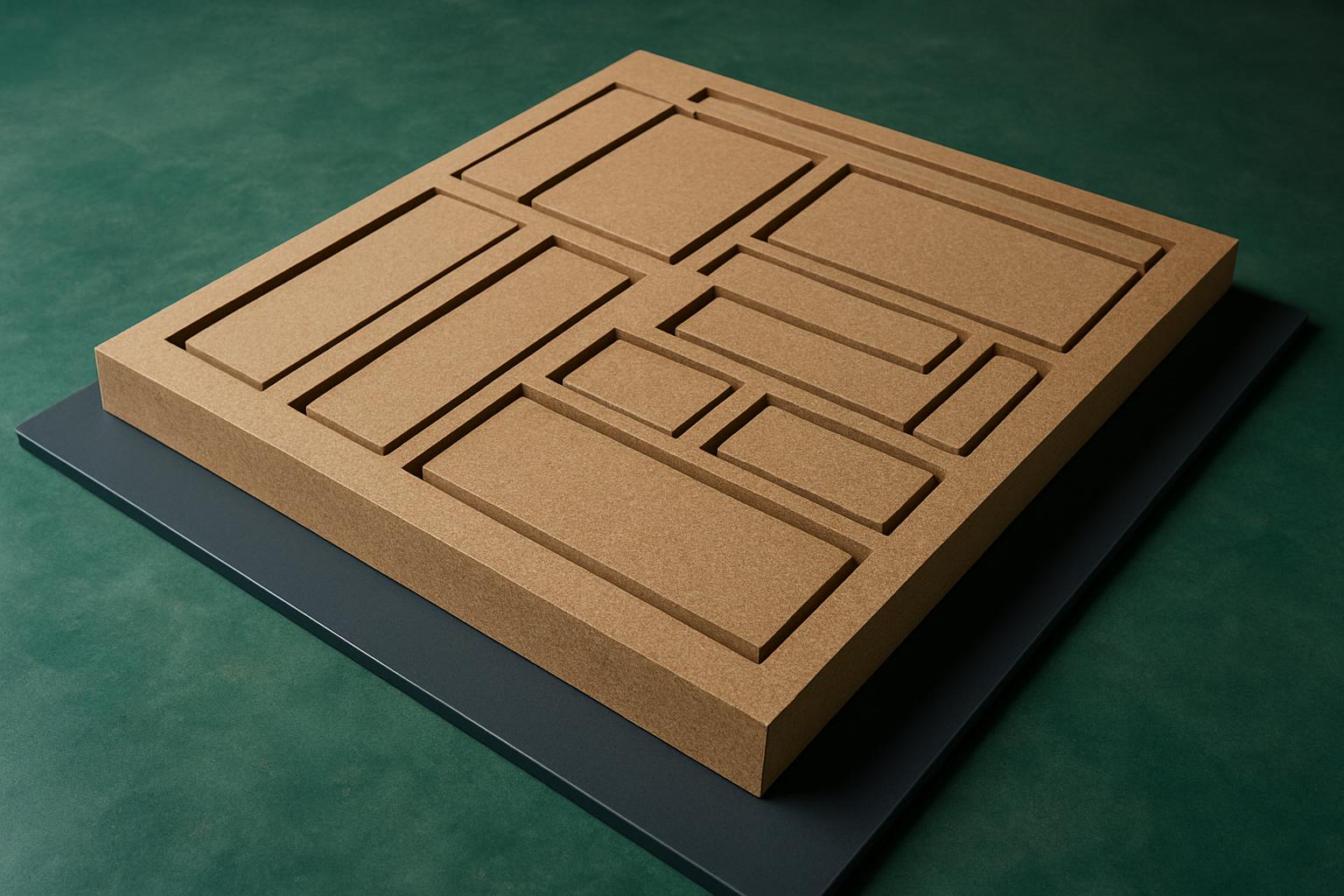
Nested MDF panels are usually cut for shopfitting carcasses, spray-ready fronts, drawer parts, and backing components where edge condition matters straight off the saw. On this material path the starting point is sheet thickness, face finish, and part density on the nest, then the Primary path: Fine Crosscut is used to keep top-face breakout under control on painted work.
Begin by noting whether the board is raw MDF, double-primed MDF, or paper-faced stock, because feed behaviour changes between them. Check the first sheet for corner swell, storage moisture, and face scuffs before loading. After that, confirm blade sharpness, bore fit, and projection so small nested parts do not tear at the last tab.
Across South African workshops, MDF often sits in dry dust one week and coastal humidity the next, which shows up quickly on edge quality. Fine dust packing around guards and extraction points can also heat the cut and mark a white-primed face. If load-shedding has interrupted production, recheck alignment and sample one panel before resuming a full nest.
For MDF nests, the useful notes are the ones that identify board type, thickness, expected face finish, and whether edges will be painted, wrapped, or hidden in assembly. Include the machine setup that matters to the cut, especially saw size, arbor details, and whether the work is batch cutting or a once-off run. If you use the contact form, send the material name and the issue seen on the sample part rather than a broad description.
Paint-grade MDF for retail fit-outs around Johannesburg, Durban, Gqeberha, Bloemfontein, and Cape Town often needs cleaner exit edges than utility shelving stock. That difference should be called up before the first panel is cut, not after components reach assembly or spray prep. A nest for mall shopfitting fronts is not set up the same way as a back-of-house storage job.
The common scrap pattern on nested MDF is edge fluffing on small rectangles, then chip-out where a dull blade exits a primed surface. Another problem appears when operators mix heavy full-sheet cuts with tiny parts without adjusting support and sequence. Keep similar part sizes together where possible so the cut remains controlled through the sheet.
Heat, dust build-up, and rushed board swaps are frequent causes of wasted MDF in SA workshops. Match the blade to the kerf note for the same material path, and use the contact form if the sample shows burning, fuzzy edges, or face chipping. Include your city, sheet thickness, and whether the board is raw or primed so the setup can be read correctly.
Primary path: Fine Crosscut. Browse more under Blades and Kerfs.
A useful message for MDF panel nesting includes the board thickness, panel size, saw bore, and the finish expected after cutting. Describe both the edge and the face if the problem is visible on both sides. Mention whether parts are for sprayed doors, shelving, counters, or concealed internals because the cut standard differs between those uses.
Reducer rings, flanges, and clamping hardware under Holders can affect how consistently the blade runs on repeated MDF work. Printed setup references under Resources help keep the same naming in the cutting area and the office when a batch is being checked. Use both sections when the issue looks mechanical rather than material-related.
Operated by Astros Marketing (Pty) Ltd. Use our contact form.
Verified Google reviews
Kya Sands enquiries should be sent through our contact form with the MDF thickness, face finish, and saw bore. Johannesburg shops cutting nested painted panels should also mention any edge fluffing, dust packing, or burn marks seen on the first sheet.