Contact form
Consumables
Flanges, shims, cleaning cards, and bore reducers.
Use our contact form for saw model, arbor size, and reducer queries. The Setup guide covers flange order, shim placement, and bore checks before fitting. Care notes explain cleaning cards, dry storage, and keeping reducers matched to each saw.
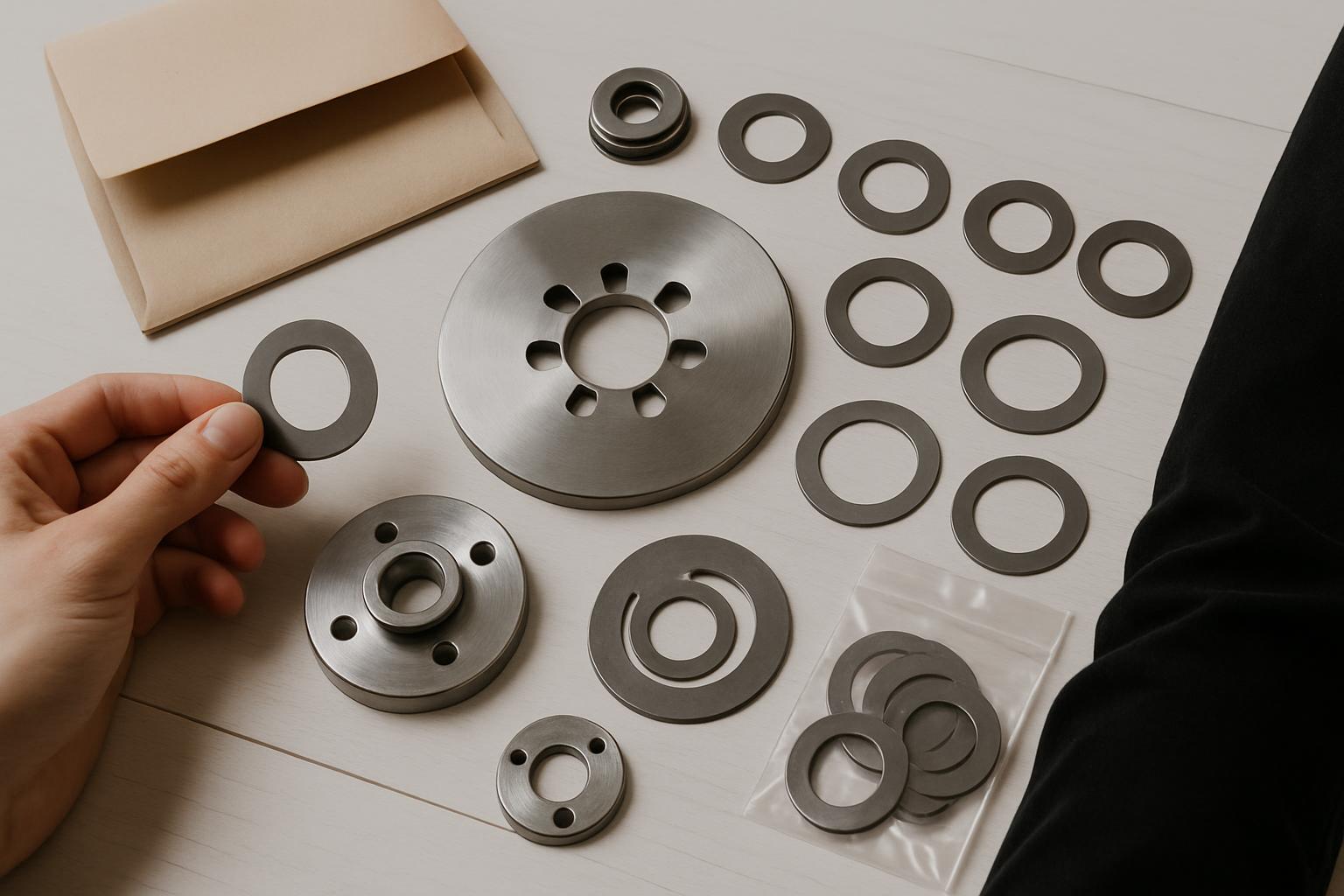
A Workshop Spares Kit keeps the small parts around the blade station in order when cutters are swapped through the day. It typically covers flanges, shims, cleaning cards, and bore reducers that suit mixed arbor sizes found in cabinet, timber, and light aluminium work. In Gauteng dust and coastal moisture both matter, so these parts need to stay clean, dry, and clearly marked per machine.
Reducer rings must match the blade bore and the saw arbor without play, otherwise run-out shows up long before the teeth are at fault. Thin shims help correct stack height and spacing on scoring sets or special setups, but they should never be mixed loose in a drawer. Label each reducer by saw and keep flange pairs together so operators are not guessing during a blade change.
Before the first cut, check that both flange faces are clean, flat, and free of resin or fine grit. A cleaning card is handy for wiping contact faces and removing build-up that can throw a blade off centre. After a power interruption or mid-shift stop, repeat the bore and flange check before restarting the run.
Most kits are built around the consumables that go missing first in a busy workshop: spare reducers, marked shims, cleaning cards, and replacement flange sets where needed. These are not cutting tools on their own, but they directly affect blade alignment, finish quality, and vibration on the machine. For blade selection by board type, see Materials.
Keep one kit per saw where possible, especially if your machines use different arbor diameters or flange sizes. Read the note under Kerfs when changing from one plate thickness to another, because reducer fit and flange support still need to suit the blade body. If you use our contact form, send the saw make, arbor size, blade bore, and whether the issue shows as wobble, burning, or chipped edges.
Highveld dust settles on exposed arbor parts quickly, so flange faces and reducers need more frequent wiping than many teams expect. On the coast, light corrosion can start on spare steel parts if kits are left near open doors or unsealed benches. Store the kit closed, dry, and close to the saw rather than in a general hardware bin.
Load-shedding interruptions make it easy for small parts to be put back in the wrong place during a rushed restart. Keep a simple order for removal and refit: outer flange, blade, reducer, inner flange, then the marked shims if used on that setup. Where scoring and main blades share bench space, separate those spares physically so reducers and shim packs do not get crossed between units.
Operated by Astros Marketing (Pty) Ltd from Sunnyrock 1401, with the shop in Kya Sands, Johannesburg.
| Teeth / grind | kit |
|---|---|
| Kerf | , mm |
| Bore | mixed |
| Notes | Label bore reducers by saw. |
Record arbor diameter, common blade bores, flange outside diameter, and any shim thicknesses used on that machine. Those figures make repeat ordering simpler and help trace vibration issues that look like blade faults but start at the mounting hardware. For extra machine information, use the contact form and give the saw make and arbor size.
For kit checks, use our contact form and list the saw model, arbor size, and the bore reducers you need. Include whether you need spare flanges, shim packs, or cleaning cards for melamine and board work. Kya Sands, Johannesburg remains the handover point for many Gauteng workshops that want these small parts grouped properly.
Verified Google reviews