Contact form
Guide
Set the saw for a thin kerf rip cut before the first production length. Check arbor fit, knife line, fence parallel and blade height so the board tracks cleanly from entry to exit.
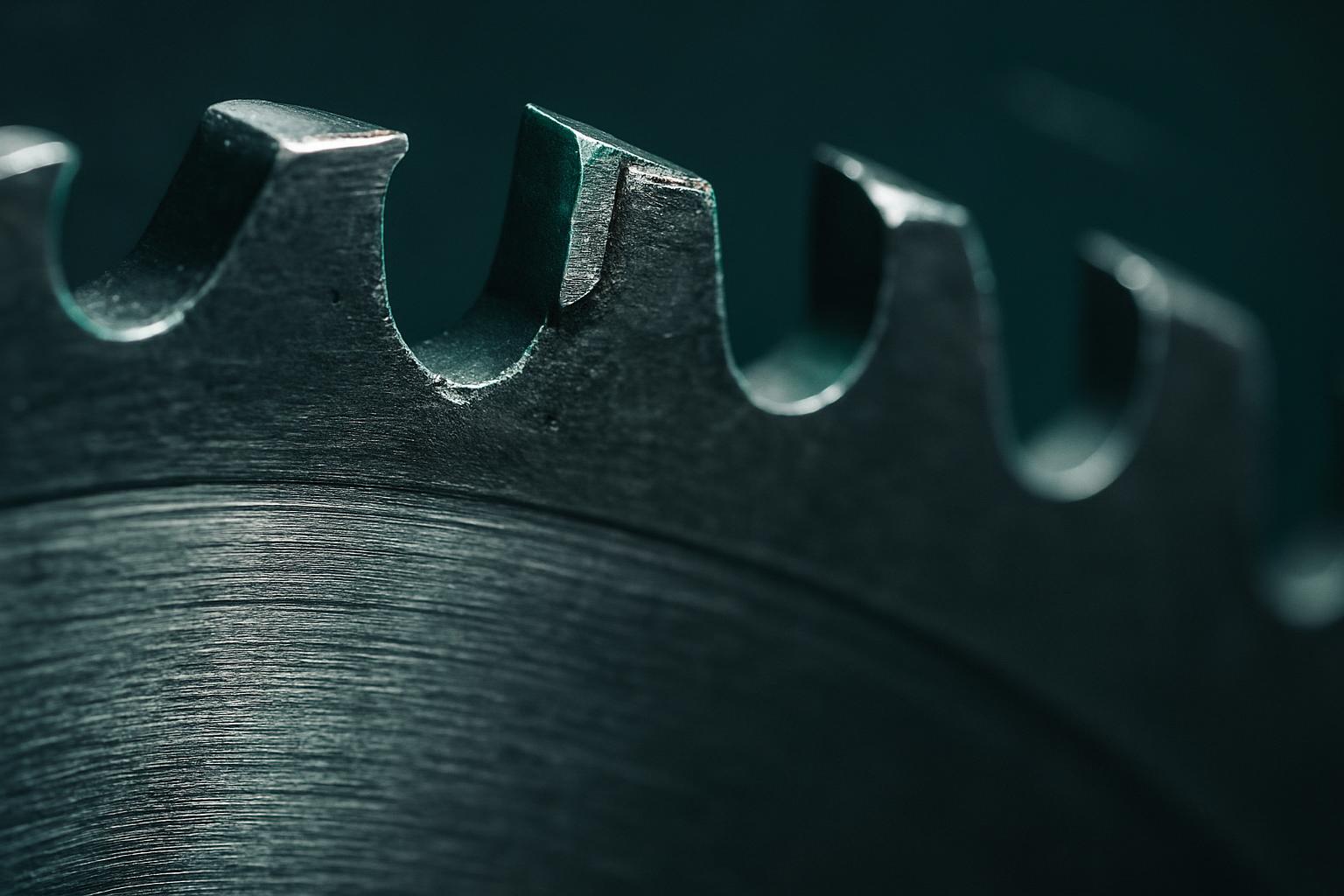
Start with the machine isolated and the arbor threads free of dust and pitch. Fit the Thin Kerf Ripping blade with clean flanges, tighten to the saw maker's spec, then rotate by hand to confirm guard and knife clearance. On Highveld winter mornings, many Johannesburg shops make two or three trial rips in offcuts first because a cold start can show up alignment faults quickly.
A thin kerf blade needs the correct bore for the saw, not a loose stack of makeshift spacers. Keep the reducer ring marked to that blade, then verify the riving knife is slightly thinner than the plate and still narrower than the cut. If the fence has crept out of parallel overnight, burning and drift will show up straight away in pine and saligna.
Keep a record of the first acceptable rip from each setup, with the sawn edge visible. That sample gives the next operator a clear reference for tooth marks, feed pace and whether the cut stayed square through the board. A short note at the machine works better than a long chain of workshop messages.
Thin kerf ripping depends on stock support and steady feed more than brute force. SA pine usually clears well with a positive, even push, while wet gum and dense hardwood need extra attention to heat build-up and closing grain behind the blade. For laminated board, confirm the face is supported and the fence is not pinching the panel near the outfeed side.
Keep the matching material path beside the saw and check the kerf note before changing stock thickness or species. Arbor length, motor size, and splitter clearance matter more on a thin kerf setup than on a full-plate rip blade. If your machine sits outside common workshop specs, send the details through our contact form.
Pause the run if the board starts closing on the back teeth, the saw begins leaving burn lines, or the blade pulls sideways in hardwood. Those signs usually point to fence error, knife mismatch, a dirty blade or stock stress rather than a feed problem alone. Switching to another material path is cheaper than pushing a full batch through the wrong setup.
If stock is being sourced through centres near Clearwater, Cresta, Pavilion, Tyger Valley, Baywest, Mimosa or Riverside, note the blade name and the timber or board type tested before handover. That makes it easier for the next branch or buyer to continue from the same setup reference without repeating every trial cut.
Verified Google reviews