Contact form
Acrylic / PVC
Triple-chip grind for acrylic, PVC, and polycarbonate.
Need help matching acrylic, PVC, or polycarbonate to this blade? Use our contact form with the sheet thickness and saw type. For arbor fit, feed direction, and start-up checks, see Setup guide. Cleaning resin build-up and storing the blade flat are covered under Care.
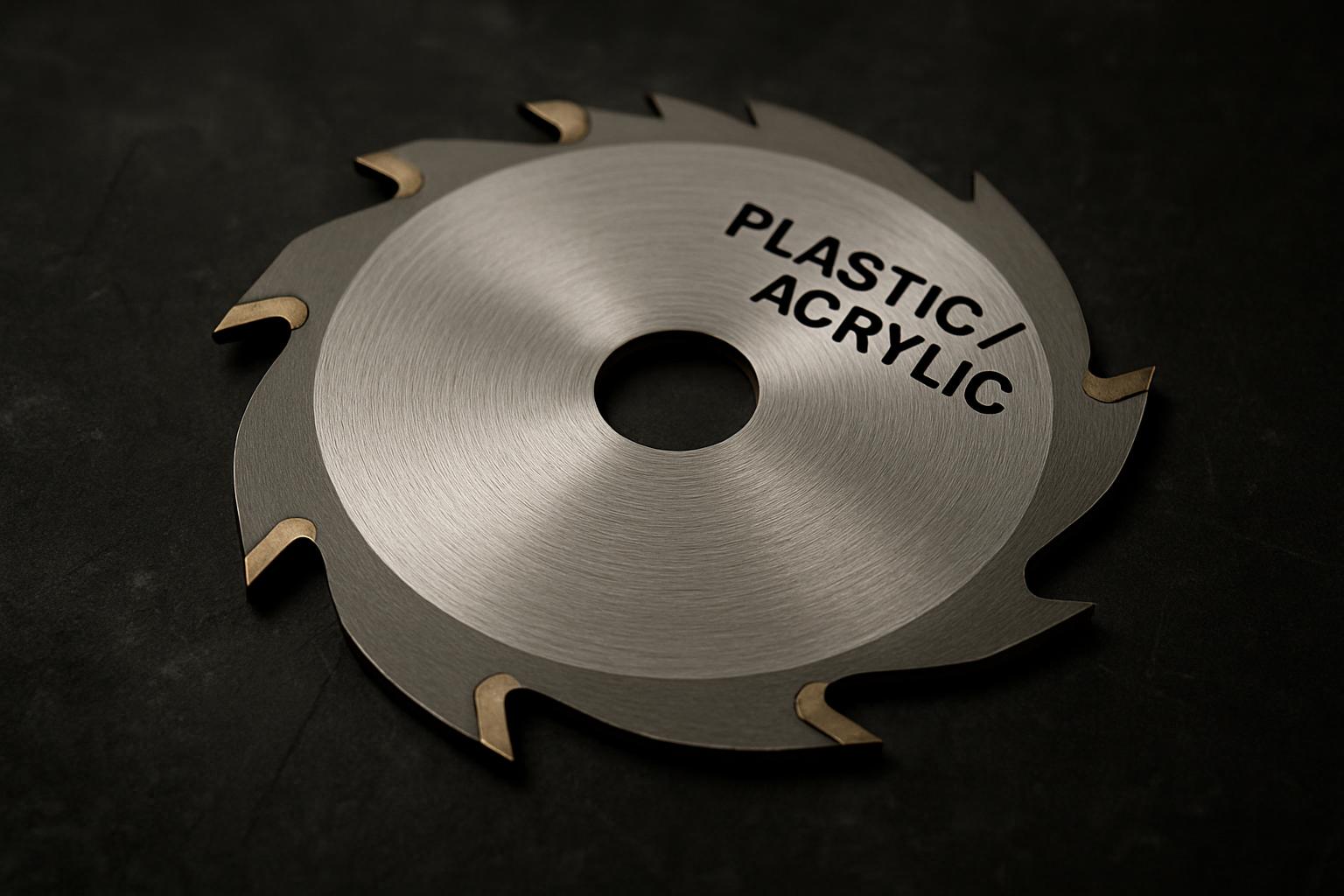
Plastic Triple Chip is used where sheet plastics need a tidier edge and less chipping than a general wood blade gives. The 80T TC pattern suits acrylic display parts, PVC panels, and polycarbonate guards on cabinet saws and beam saws. In Gauteng shops, static dust and fine swarf can cling to the cut line, so visibility around the fence matters.
This blade is not for rushing thick plastic through a hot cut. Triple-chip geometry works best when the feed is steady and the blade stays clean, especially on film-covered acrylic and glossy PVC faces. The 2.5 mm kerf and 30 mm bore should be checked against the machine before the run starts.
Leave the protective film on during cutting if the sheet arrived wrapped. After the first sample, inspect both the top face and the exit edge for feathering, melt marks, or tiny corner chips. Peel film only once the part has cooled and the edge has been checked.
Use this option when the job is mainly acrylic, PVC, or polycarbonate rather than timber board products. It is meant for cleaner plastic edges, controlled chip-out, and repeatable cuts on signage pieces, machine covers, and shopfitting components. If the material mix changes, compare the blade with the linked Materials path before swapping setups.
Before cutting a full stack, confirm the sheet type, thickness, and whether a polished edge is needed straight off the saw. Then read the note under Kerfs so the 2.5 mm cut width matches the drawing and any nesting allowance. If you need to check compatibility, use our contact form and include the plastic grade, blade size, and machine model.
Highveld static can pull plastic swarf back onto the table, so operators often need a quick wipe between cuts on thin sheet. Coastal humidity can leave condensation on stored stock, which affects feed feel and can mark protective film. On either side of the country, a clean flange face helps the blade run true on plastics.
Plastic sheet reacts quickly to heat, especially during repeated rip cuts in warm afternoon conditions. Keep extraction clear, avoid dwelling in the cut, and watch for fused chips collecting near the guard. If power interruptions stop the run, recheck alignment and the sample edge before carrying on. Where the machine setup needs parts rather than blade changes, look at Workshop Spares Kit and review score settings separately from the main blade.
Operated by Astros Marketing (Pty) Ltd from Sunnyrock 1401, with the shop in Kya Sands, Johannesburg.
| Teeth / grind | 80T TC |
|---|---|
| Kerf | 2.5 mm |
| Bore | 30 mm |
| Notes | Feed slow; peel film after cut. |
Plastic sheet cutting uses 80T TC, a 2.5 mm kerf, and a 30 mm bore. Those figures matter when you are matching arbor size, cut width, and finish expectations on plastic sheet. For machine-specific questions, use the contact form and include the blade diameter in your message.
When you send a note through our contact form, include whether you are cutting cast acrylic, extruded acrylic, PVC or polycarbonate, plus the sheet thickness and saw type. TrueCut is in Kya Sands, Johannesburg, so it also helps to mention if the material came from a local plastics supplier and whether chip-out or edge melt is the main issue.
Verified Google reviews