Contact form
Grooving
Adjustable dado for grooves and housings.
Use Setup guide before fitting the stack, then keep Care close to the saw for cleaning and storage. If you need arbor or groove-width guidance, Send us a message with the saw model and the board material.
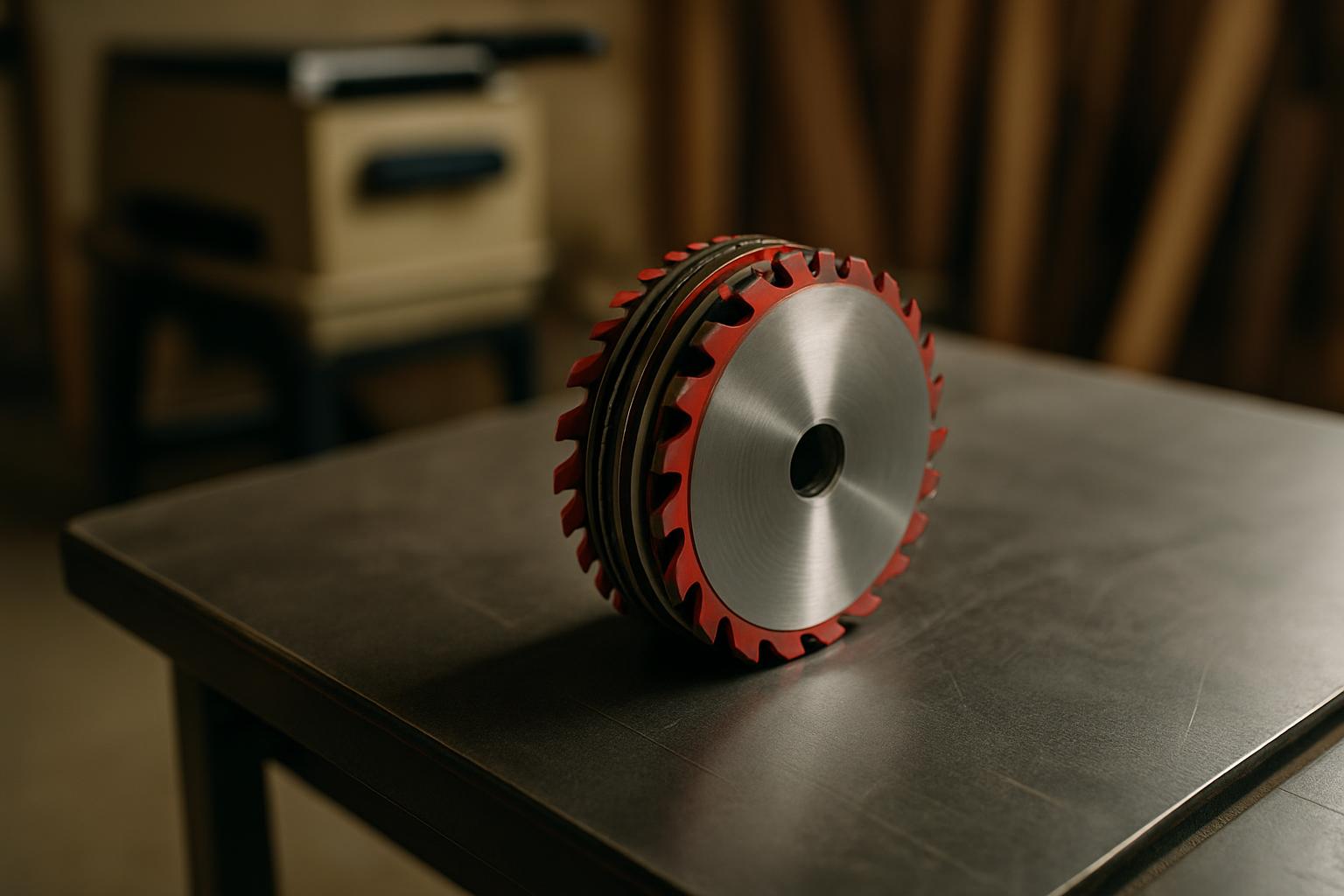
A dado stack set is used where a single pass needs a flat-bottom groove for cabinet backs, shelving housings, drawer dividers, or trenching in solid timber. On South African workshop saws, that usually means checking arbor length and throat plate clearance before the first cut, especially on older 30 mm bore machines. The 6,20 mm kerf noted here suits narrow trench work where a standard saw blade would leave a rounded base or need repeated passes.
Board type changes how you set the stack. Melamine-faced chipboard needs slower feed and proper support to limit breakout on the edges, while SA pine and meranti clear chips more easily but can burn if the stack is packed too tight or the fence is not parallel. Spacer selection matters because a housing that is even slightly wide will show when shelving goes in dry without screws.
Before production, make one test groove in offcut from the same sheet or timber batch. Measure the width with callipers, check the base for ridges, and confirm the housing depth against the drawing. That quick check saves rework on carcass sides and drawer parts later in the day.
Start with the saw specification, not only the blade size. Confirm that the arbor takes a stacked cutter safely, that the nut still engages fully once chippers and shims are fitted, and that the insert plate supports the work near the cut. For board products and hardwood housings, compare the stack setup with your Materials notes before choosing feed speed and depth.
Read the width notes under Kerfs when you need the groove to match ply, MDF, or imported board that runs under nominal size. If anything on the machine setup is uncertain, use our contact form and include the stock thickness, target groove width, bore size, and arbor length. Also wipe the flanges clean before assembly, because compacted dust can throw the stack out of true.
Many local panel shops run table saws that were set up for standard blades, not stacked cutters. That makes insert clearance, guard arrangement, and arbor thread engagement more important than the cutter spec on its own. In Gauteng dust, resin and fine chip build-up around the flanges can affect groove accuracy faster than operators expect.
Coastal humidity can raise MDF edges slightly after cutting, so groove fit should be tested in the same conditions where assembly happens. During load-shedding planning, avoid leaving the stack fitted on a stopped machine where dust settles between the plates. If the saw is shared between ripping and trenching work, keep a separate setup record so blade height and fence position are not guessed from memory.
Operated by Astros Marketing (Pty) Ltd from Sunnyrock 1401, with the shop in Kya Sands, Johannesburg.
| Teeth / grind | stack set |
|---|---|
| Kerf | 6,20 mm |
| Bore | 30 mm |
| Notes | Check arbor length before first pass. |
The figures needed at the machine are stack type, 6,20 mm kerf, and 30 mm bore. Use the contact form if you need to confirm compatibility with a specific arbor, insert plate, or groove application before fitting the set.
Send the saw make, arbor diameter, and required groove size through our contact form. TrueCut is in Kya Sands, Johannesburg, and the more exact the machine details, the easier it is to match the dado stack set to the work.
Verified Google reviews