Contact form
Care
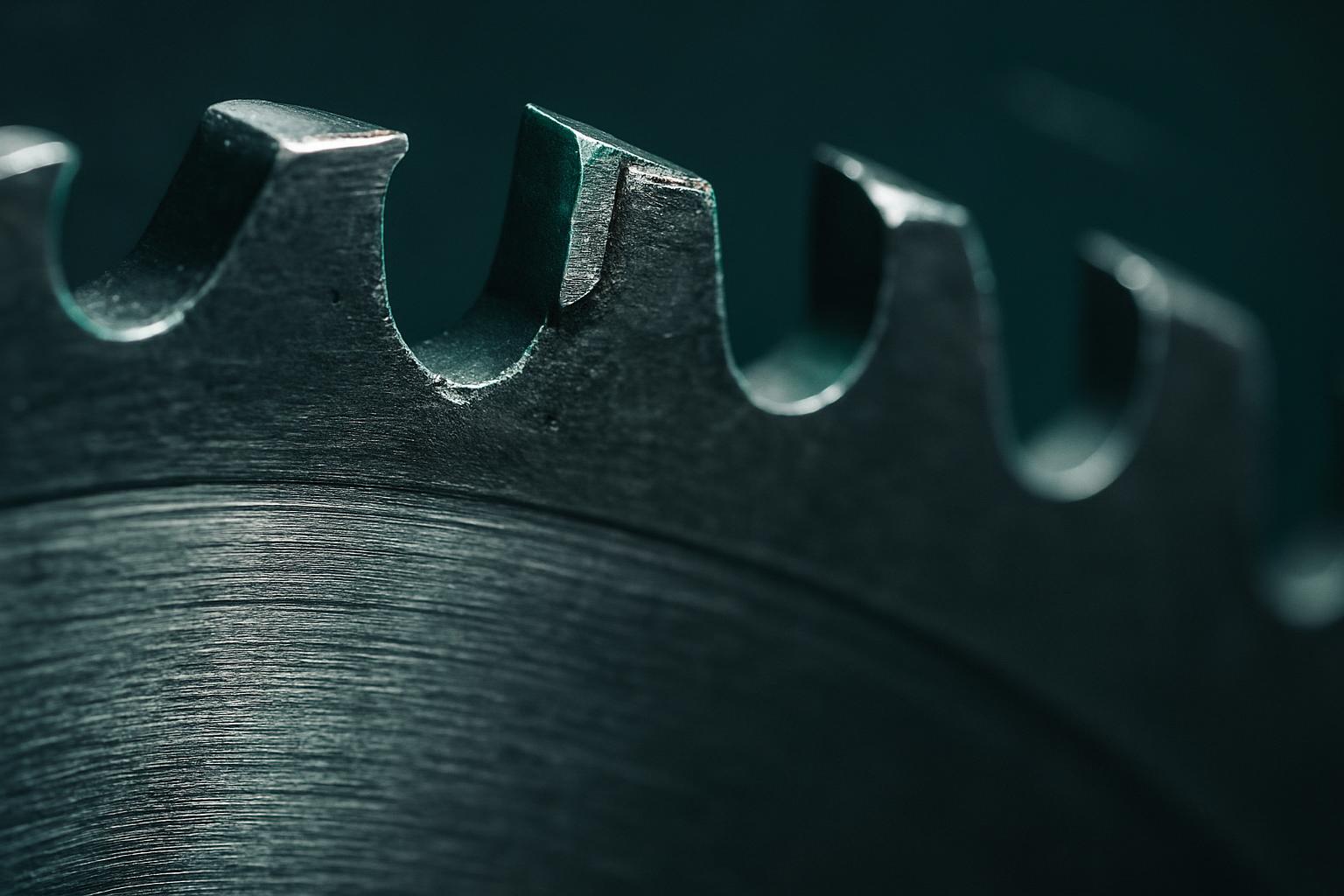
Pitch on a carbide rip blade hides heat marks and tiny tip damage, so wash the plate before deciding whether it must be sharpened or binned. Use a non-caustic blade cleaner, rinse properly, and dry the bore and gullets so flash rust does not start around the body. Store each blade upright with the teeth protected, not stacked loose in a drawer with spacers and offcuts.
Rip work in SA pine and wet gum leaves resin in the gullets faster than most shops expect. Wipe both flange faces, clean the tooth pockets, and check that no compacted sawdust is sitting behind a tip. A carbide rip blade that goes back on the saw clean will track straighter and needs less force through long solid timber cuts.
After a heavy day on pine, spruce, or laminated board edging, give the blade a soak and brush out every second gullet if buildup is thick. Once a month, inspect the bore, the expansion slots, and the flange contact ring for scoring or fretting marks. Following load shedding or generator changeover, let the blade cool fully before fine ripping, because heat soak can mask wobble and make a cut look like a setup fault.
Send a carbide rip blade for sharpening when the corners have rounded off, feed pressure has crept up, or burn marks appear in straight grain timber. Retire it if a tip is cracked, if the plate is blued near the rim, or if runout stays after the arbor and flanges have been cleaned. Many workshops use sharpening services in Johannesburg, Durban, and Cape Town, but a badly stressed plate is not worth another cycle.
Describe the carbide tips, bore and any burn marks through the contact form. Include blade diameter, tooth count and the timber or board being ripped, especially if the problem showed up on wet pine, gum, melamine-faced chipboard or laminated oak. If the issue points to flange wear, reducer fit or poor storage, check Holders for caddies, bushes and mounting parts that keep a Carbide Rip Blade running true.
Keep carbide rip blades on a rack with each tooth line facing into rubber, timber, or dense foam so the tips cannot strike steel. For site moves between Kya Sands, Midrand, or a customer workshop, use a sleeve or caddy that supports the plate near the bore rather than only at the rim. If reducers travel with the blade, label them by bore size so they do not get mixed into spindle tooling.
Operated with Astros Marketing (Pty) Ltd.
Before the blade goes back on the saw, confirm the bore is clean, the rotation arrow matches the machine, and the kerf is still suitable for the rip work being run. If the cut quality changed after a blade swap, send details through our contact form with the saw model and material being cut. Kya Sands, Johannesburg.
Verified Google reviews