Contact form
Material path
Scored laminate tops without chip-out on the face.
Primary blade: Scoring Pair
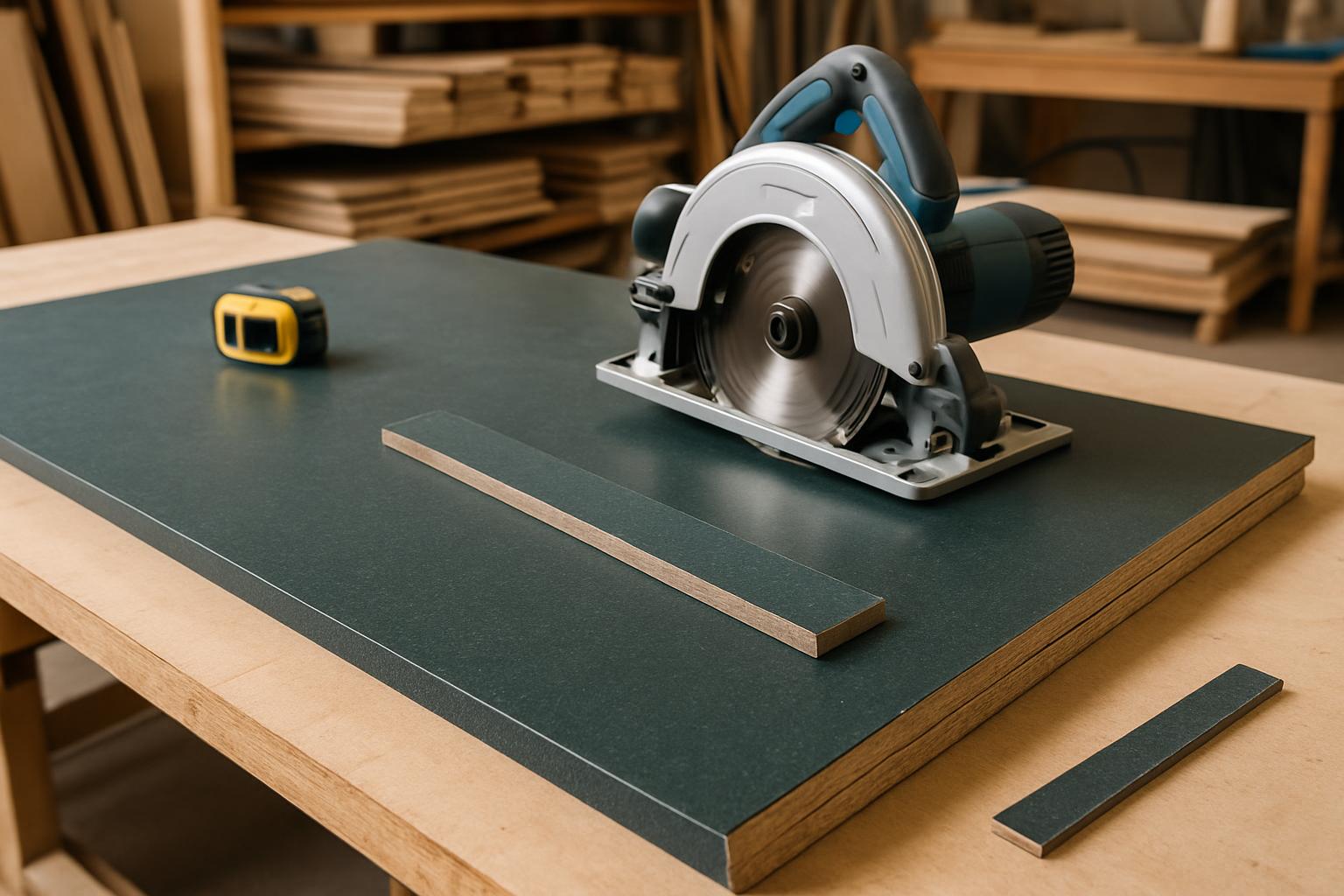
Laminate top scoring is used where a decorative face must stay clean on both long rips and short cross-cuts. On panel saws, the scoring pair nicks the underside first so the main blade can finish the cut without pulling chips from the laminate. Kerf choice matters here because score width must match the main blade closely enough to avoid witness lines and edge breakout.
Start by identifying the board build, whether it is postform top stock, laminated chipboard, or MDF with high-pressure laminate. Set the scorer for shallow entry only, then match score width to the main blade before running saleable sheets. After the first test piece, inspect both faces, the exit corner, and the edge banding side if that panel will be edged later.
On South African workshop sites, dust build-up and interrupted power can throw scoring alignment off faster than many teams expect. A machine that sat idle through load-shedding often needs another quick test cut once power is stable again. Do the check on offcut first, especially with dark gloss laminates where even small chips show immediately under showroom lighting.
For laminate tops, the useful brief is simple and exact. Send the board type, thickness, saw make, bore size, and whether the chipping appears on entry or exit. If you are using the contact form, include the material name and the current scoring width so the blade path can be checked against the kerf note.
Workshops cutting kitchen and counter panels for projects moving through Kya Sands, Clearwater, Cresta, Pavilion, Tyger Valley, Baywest, Mimosa, and Riverside usually need the same thing from this path: a clean laminate face that does not need hiding with trim. That makes early scoring checks more valuable than trying to sort chipped sheets once installation dates are fixed.
Most problems on laminate tops come from three points: scorer too wide, scorer too narrow, or score height set too aggressively. Worn teeth can also leave a furry edge on the underside even when the top face looks acceptable at first glance. Mixed board batches make this worse, especially when one stack has a harder laminate skin than the previous pack.
Heat, airborne dust, and rushed blade changes are common causes of scrap in busy SA workshops. Check the scoring pair with the matching kerf note before cutting a full batch, and use the blade guide leaf when the edge shows light breakout or scoring marks. Send details through the contact form with your city, panel size, and whether the job is for counters, desks, or kitchen tops.
Primary path: Scoring Pair. Browse more under Blades and Kerfs.
The most useful message lists the laminate type, panel thickness, machine arbor, and the size of the chip if one is visible. A clear photo of the cut edge helps when the problem appears only on cross-cuts or only on one face. Mention whether the cut is straight from the saw or followed by edge banding, because that changes how much edge disturbance is acceptable.
Mounting parts affect scoring accuracy more than many operators expect. Check flanges, bushes, and other items under Holders if the score wanders or sits off-centre from the main blade. Printed set-up cards under Resources help keep the same measurements at the saw through operator changes.
Operated by Astros Marketing (Pty) Ltd. Use our contact form.
Verified Google reviews
Laminate top scoring queries can be sent through our contact form, or you can visit the Kya Sands, Johannesburg premises.