Contact form
Material path
Flush trim after banding on melamine and ply.
Primary blade: Trim Flush Blade
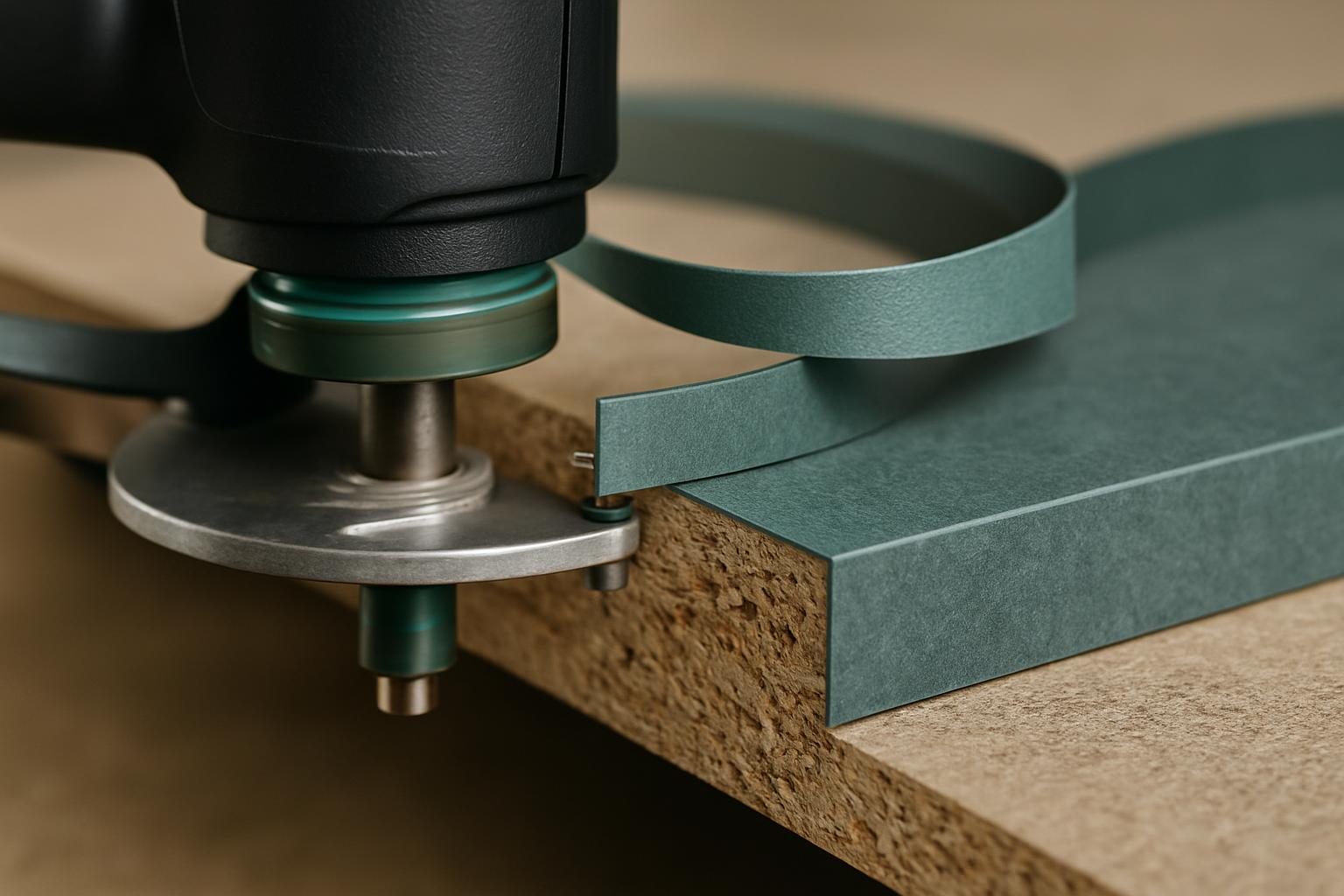
Edgeband flush work starts after the bander, when ABS or PVC edging sits proud of the face and needs a clean, level trim. On melamine and plywood components, the aim is a flush edge without digging into the decorative face or leaving a fine lip on corners. The Primary path here is Trim Flush Blade, used where repeatability matters more than aggressive stock removal.
Check the panel first, not only the edging roll. Thin melamine skins, veneered ply faces, and prefinished birch all react differently if the trim is set too hard against the board. Set the blade path for the edging thickness, run a sample offcut, and inspect both long grain and short edge before the full batch goes through.
Power interruptions and dusty bays in South Africa often show up in the finish long before the operator sees the cause. A rushed restart can leave heat marks on white edging or a slight overtrim on dark boards where the line is easier to spot. Keep one approved sample part at the machine so resets return to a known result after load-shedding or tool changes.
For this operation, the useful notes are simple and visual. Record the board type, edging thickness, and whether the face is melamine, veneer, or painted before sending details through the form. If the first pieces show witness lines, mention the saw or trimmer model and the edge material so the blade path can be matched properly.
In busy areas such as Kya Sands, Durban, Cape Town, Gqeberha, Bloemfontein and Nelspruit, cabinet shops often run mixed board packs in one shift. That makes clear trim notes useful when white melamine carcasses, oak-look doors and ply internals all pass through the same bay. A flush edge that looks fine under workshop light can still show a proud line once it reaches retail or hospitality joinery.
The common miss on Edgeband flush is taking too much off the band to hide glue squeeze-out. That leaves a shallow hollow at the edge, especially visible on gloss melamine and dark decors. Another problem is corner chipping on plywood parts where the face veneer is thin and the trim enters too aggressively.
Heat build-up, worn tooling and mixed edging stock create most reject parts in local cabinet production. Match the blade to the kerf note, then use the contact form with your city, board type, edging size and the fault you are seeing. A close photo of the edge, corner and face usually tells more than a long description.
Primary path: Trim Flush Blade. Browse more under Blades and Kerfs.
Send the material name, machine type, arbor or holder details, and whether the problem shows on melamine, plywood or both. Include edging thickness and colour if the line is only visible on dark PVC or high-gloss ABS. Photos should show the face, the edge profile and one failed corner from close range.
Machine hardware affects this cut as much as the blade itself. If reducers, flanges or clamping parts may be involved, check under Holders before changing trim settings blindly. Printable reference cards under Resources help keep the same terms in the machine area and the dispatch stack.
Operated by Astros Marketing (Pty) Ltd. Use our contact form.
Verified Google reviews
Kya Sands, Johannesburg. Use our contact form for edgeband flush questions, especially when melamine edges are chipping after trimming or the band sits slightly proud on ply panels.