Contact form
2026-08-25
Thin kerf is not a shortcut for dense hardwood rips.
By Mr Ayanda Baloyi, workshop lead
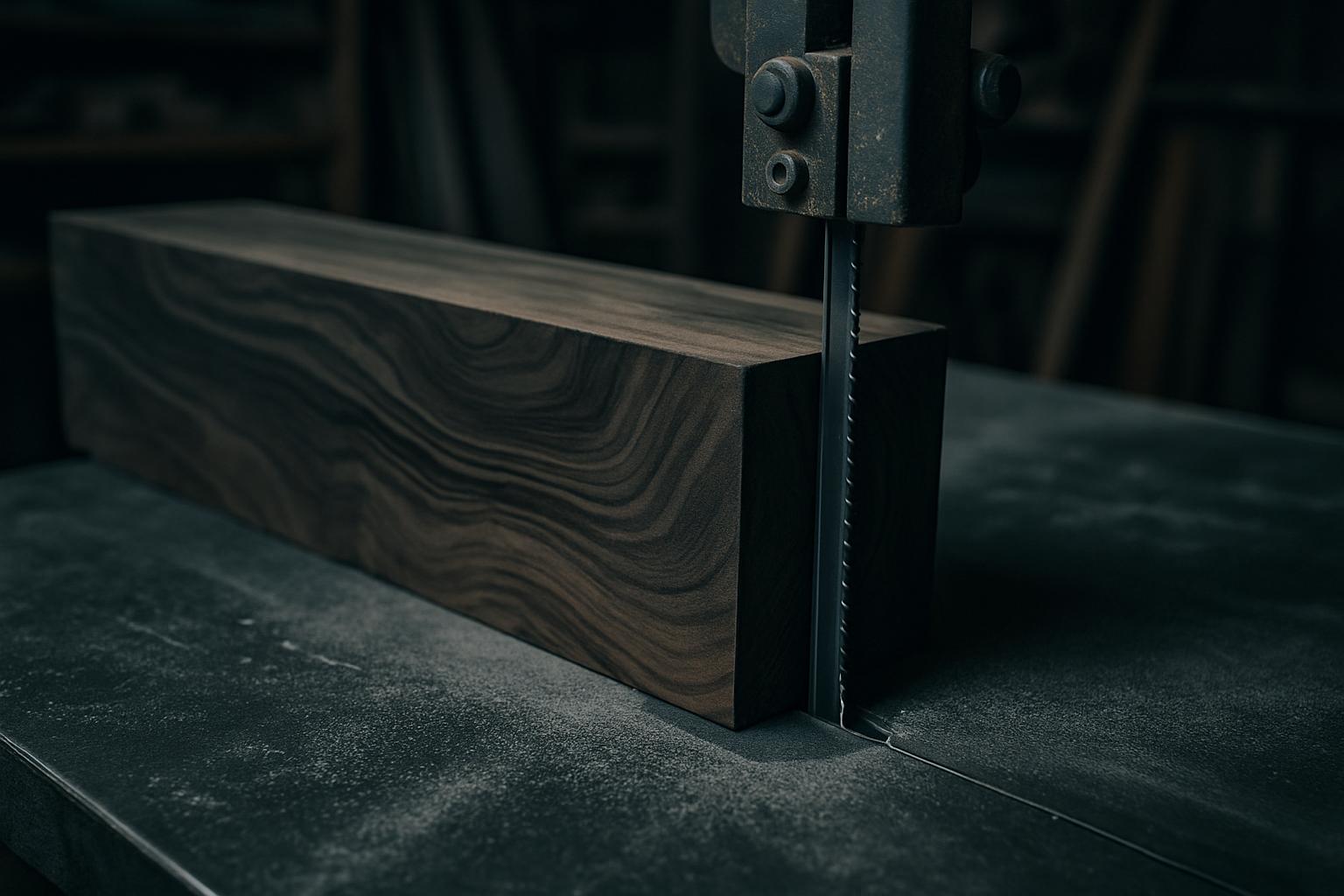
A thin kerf blade can look efficient on paper, but thick hardwood changes the cut completely. In 40 mm to 50 mm oak, meranti, maple and similar dense stock, the narrower plate has less margin once feed pressure rises, resin builds, or the board starts closing behind the blade.
Mr Ayanda Baloyi writes for operators who are ripping heavy timber, not trimming veneered sheet. Dense boards expose every weakness in setup, especially on smaller saws with modest motor reserve. The focus is blade stability, fence pressure, and what to inspect before the first long cut.
Use this note before committing a stack of expensive hardwood to a thin kerf rip blade. One test board tells you more than assumptions, particularly when the stock has been stored through a damp Durban spell or a dry Gauteng morning. Mark the cut face, check drift, and look at the burn pattern before running the rest.
Read the matching blade path with the relevant material path when the job includes thick hardwood ripping. Blade thickness, body tension and hook angle matter more here than saving a few millimetres of fibre. If you send details through our contact form, include timber species, board thickness and saw type so the recommendation starts from the actual cut.
On many South African workshop saws, thin kerf issues show up first as heat rather than obvious wobble. Johannesburg dust on the arbor, coastal moisture in stored timber, and long unsupported boards all increase the chance of blade squeeze in the cut. A faint scorch line, extra feed noise, or polishing on one side of the plate means stop and reassess before the blade starts snaking.
Not every hardwood batch behaves the same, even under one species label. A stack with internal stress can close the kerf halfway through the rip and punish a light blade body immediately. Browse more under Kerfs when you need a note that fits a different cut condition.
Start with a single straight board from the same pack as the job. Rip it at normal feed speed, then inspect both faces, the offcut, and the blade body temperature after the pass. If the saw needed extra push, the cut line wandered, or the timber pinched near the back teeth, move away from thin kerf for that thickness.
Inland shops often fight dry stock and fine dust, while coastal shops see more timber movement during the day. Thick kiaat, saligna and imported oak can all behave differently once the core tension releases. Add support rollers, keep the fence true, and clean pitch early because hardwood heat builds fast on a narrow plate.
When using our contact form, send the city, timber species, thickness, and whether the saw is cabinet, panel, or site based. A note on motor size and current blade diameter also helps when the question is whether thin kerf is still sensible. That makes it easier to match the cut to the right blade path instead of treating all hardwood rips as the same job.
This catalogue note is a limit marker, not a ban on every thin kerf blade. In thinner hardwood sections or on well-supported cuts, reduced kerf can still be useful. Once the timber gets thick and dense, though, blade stiffness and clean chip clearance usually matter more than saving material on the line.
For thick kiaat, saligna, or oak rip cuts, include blade diameter, plate thickness, arbor size, and timber thickness when using our contact form. Mention whether the saw is a table saw, panel saw, or radial arm, and note any burn marks, drift, or closing kerf. That gives the thin-kerf limit context before another blade is considered.
Verified Google reviews