Contact form
2026-08-22
Score just through the face paper, not into the core.
By Ms Masego Ngwenya, Material path writer
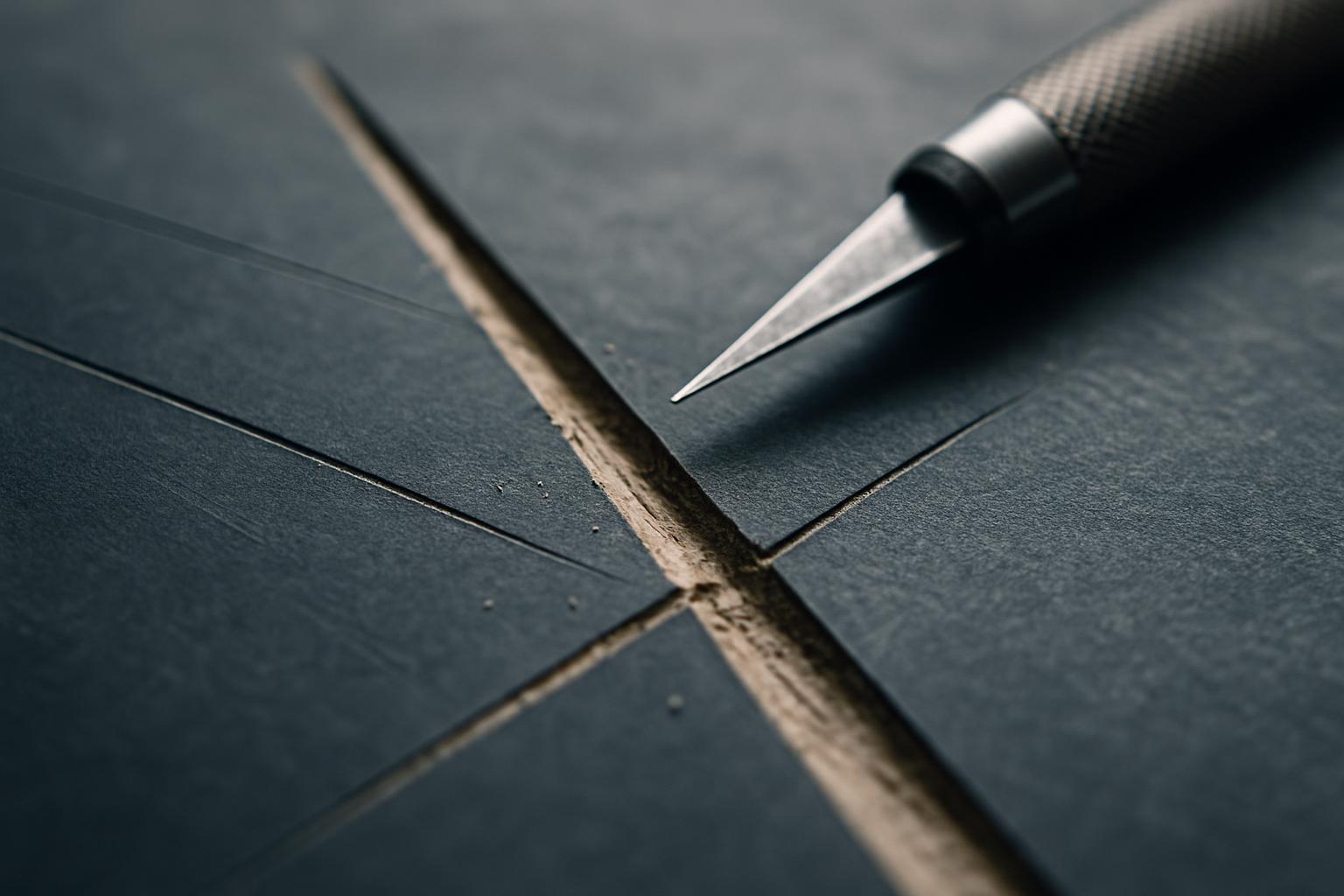
Laminate chips when the scorer reaches into the brown core instead of only nicking the decorative face and backing. On a panel saw, the sweet spot is a shallow score line that cuts the melamine or HPL skin cleanly while leaving the substrate for the main blade. This matters most on white-faced chipboard and gloss boards where edge breakout shows immediately under workshop light.
Author Ms Masego Ngwenya keeps the voice practical. No tapestry metaphors. No robust seamless filler. Just the check that saves a board when Highveld dust or coastal humidity shows up mid-shift.
Set height from a test strip, not by eye across the table. Raise the scorer until it just marks through the face paper, then stop and inspect the groove with a torch or fingernail. If you see loose core fibres in the score, the blade is too high for that pack.
Check the related blade path and material path before changing depth, width, or overlap. A 16 mm melamine board, a 22 mm shelf panel, and a compact laminate top do not take the same score setting. If you write in through our contact form, name the board type, thickness, and whether the chip is on the top face or underside.
Johannesburg dust can hide a shallow score line, so wipe the board and inspect under direct light before approving the setting. In Durban and along the coast, face papers can lift slightly on stored stock, which makes over-scoring easier than crews expect. After load-shedding, recheck height if the saw was left idle and the pack changed during the stop.
Different board brands and decors can react differently even at the same nominal thickness. Use the notes here as a starting point, then compare the edge after the first pass and log what changed. Browse related cuts under Kerfs if the problem is width, not height.
Begin with an offcut from the same sheet stack, especially if the job mixes matt and gloss finishes. Make one short score pass, snap the offcut over slightly, and inspect whether the decorative layer is fully separated without core tearing. Only then send the first full panel across the table and label the setting on the job card.
A pack from the Highveld may behave differently after a humid week in the Cape, even when the print and thickness match. If chips appear only on cross-cuts, review overlap and alignment before lifting the scorer again. When compact laminate is on the trolley, treat it as a separate setup and do not copy the melamine setting across.
When you use our contact form, include the town, board thickness, top face finish, and whether the scorer is leaving core dust in the groove. That gives enough detail to compare the cut against the correct blade combination and saw arrangement. Add a close photo of the scored edge if the damage shows only after the main blade passes.
A higher score is not a safer score on laminate. Too much height weakens the edge before the main blade arrives and can leave a visible witness line on light decors. Reset as soon as the stock family changes from plain chipboard laminate to MDF laminate or compact sheet.
For score lines that are chipping the top face, use our contact form and note the laminate finish, panel thickness, and whether the scorer is leaving witness marks. Kya Sands, Johannesburg remains the handover point for blade catalogue queries tied to this kerf note.
Verified Google reviews