Contact form
2026-09-10
Nest lists that ignore kerf width fail on the last sheet.
By Ms Masego Ngwenya, Material path writer
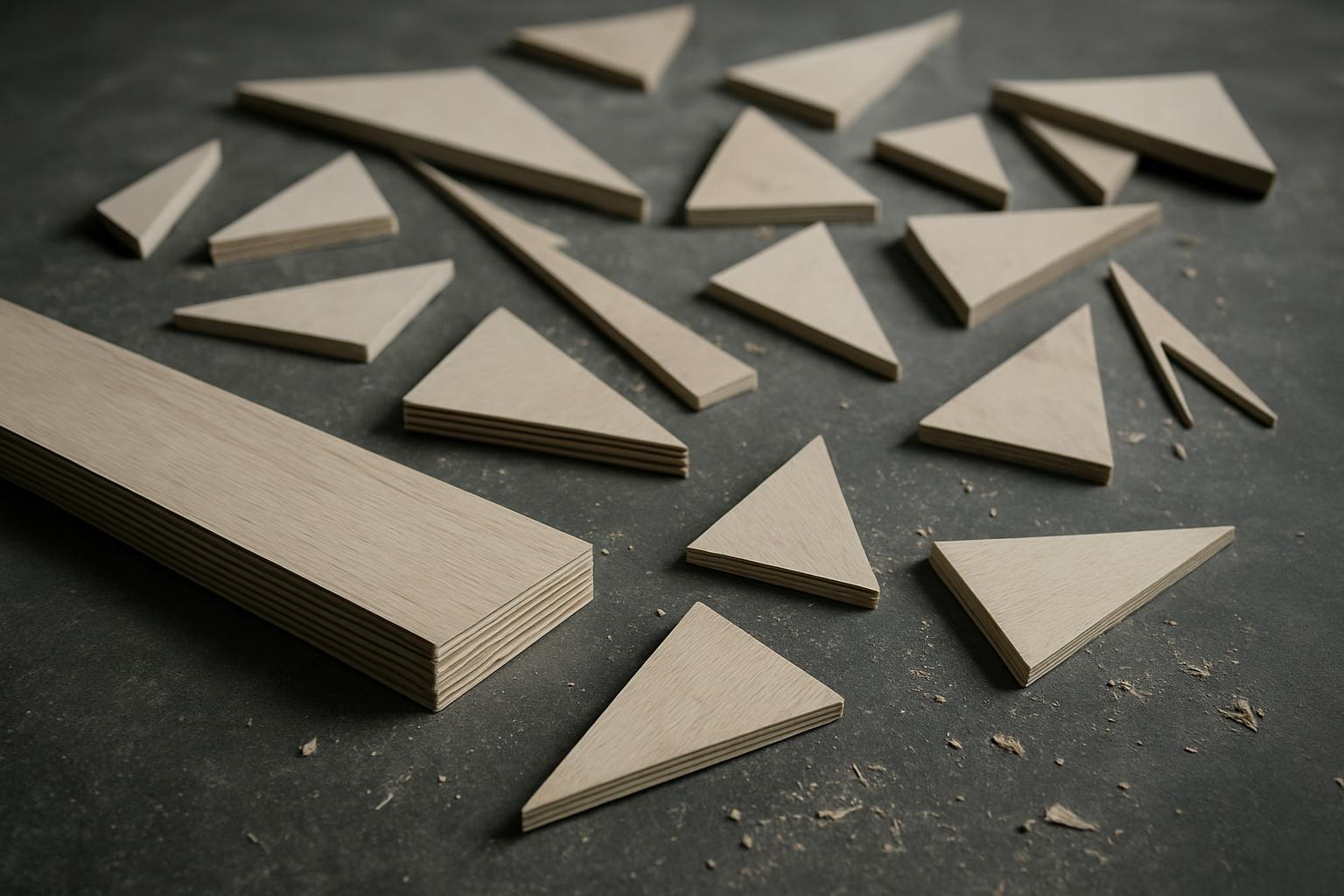
A cut list can look correct on paper and still come short once the blade has taken its share from every rip and crosscut. On melamine, MDF, plywood and chipboard, that missing width adds up fast across repeated parts.
Author Ms Masego Ngwenya keeps the voice practical. No tapestry metaphors. No robust seamless filler. Just the check that saves a board when Highveld dust or coastal humidity shows up mid-shift.
Use the note before the first sheet goes onto the saw, not after the offcut bin starts filling. Mark the blade kerf on the nest, compare it to the machine setting, and check that the optimiser has not defaulted to a neat but false value. One wrong decimal on a batch run can cost more than a fresh sheet of white melamine.
Read the relevant blade path beside the matching material path when you set up a job with tight yield. Thin-kerf and standard-kerf blades do not remove the same width, and swollen board edges can change how honest your chalk marks look by midday. If you need to query a result, use our contact form and name the blade, stock thickness and kerf value used on the saw.
Johannesburg dust, Durban moisture and Cape Town mixed batches all affect how cleanly a board cuts and how trustworthy a quick visual check will be. A blade that is heating up or packing resin can widen the effective cut and leave you short on repeated parts. Measure the actual gap from a test cut when the job is tight, especially on expensive imported ply or high-gloss panel.
Some jobs can absorb a millimetre of loss and some cannot. Kitchen carcass packs, shopfitting components and drawer parts usually need the kerf entered correctly before cutting starts. Browse related notes under Kerfs if the stock changes from board to aluminium composite or fibre cement during the day.
A Kya Sands shop nests sixteen cabinet sides from a sheet and leaves only a narrow strip for rails. If the software assumes a 2.8 mm kerf but the fitted blade is cutting 3.2 mm, the final strip arrives undersize after the earlier cuts have eaten the difference. Nobody sees the problem on the first panel because the loss is spread across the whole batch.
Coastal humidity can make stored board pick up moisture at the edges, which turns a crisp stack into one that drags slightly through the cut. Highveld dust can settle around guards and scales, making fast setup marks less reliable than a measured test piece. On OSB and shutter ply, heat build-up also changes the feel of the pass long before the operator notices the total width lost.
When you send details through our contact form, include the city, board type, thickness, blade code and measured kerf from the machine. Add whether the issue showed up in nesting, beam saw cutting or panel saw cutting. That gives enough context to compare the planned allowance with what the blade is truly removing.
Account for material loss at the cut, not general waste from poor handling or damaged corners. Keep a separate note when the job changes from 16 mm melamine to 21 mm pine, because feed feel and kerf allowance may both shift. One setting carried across a busy Friday can quietly spoil a full stack of parts.
Blade and kerf queries are best sent through our contact form with sheet size, stock type, saw model, and measured cut width. Kya Sands, Johannesburg is a common reference point for many inland workshop setups, especially where dust build-up changes the cut over a long shift.
Verified Google reviews