Contact form
2026-09-20
Write which blade is on the arbor before you leave.
By Mr Ayanda Baloyi, workshop lead
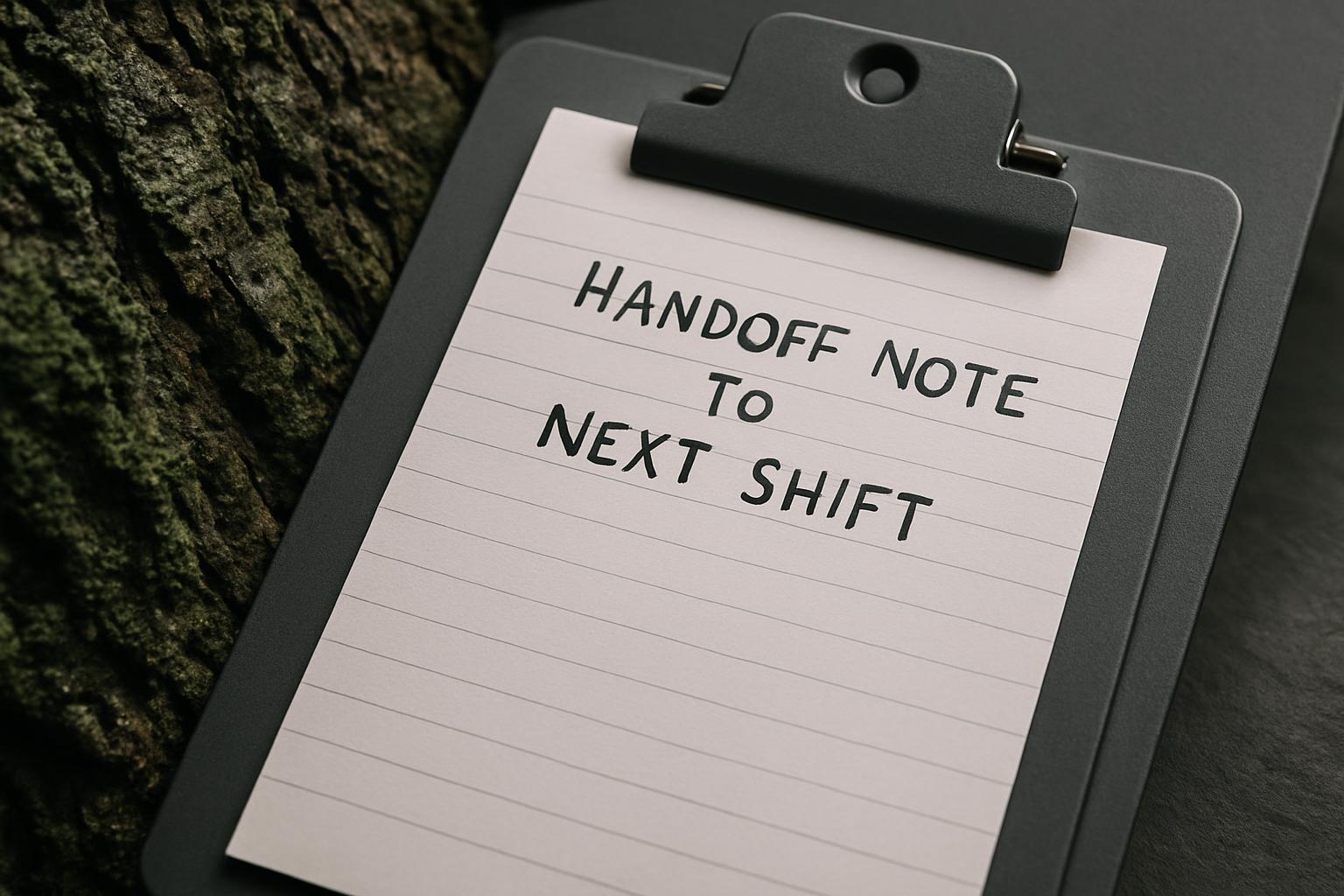
The last five minutes before knock-off need facts for the next operator, not guesses. Record the blade on the arbor, the stock cut last, and any change made to height, fence, scorer or feed pace. In shops moving between MDF, chipboard and melamine in one day, that short note prevents the first sheet of the next shift becoming the test piece.
Mr Ayanda Baloyi writes these handoff notes for people standing at the machine, not for office filing. He wants the outgoing shift to leave tooth count, diameter, bore setup and any wobble or burning mark in plain wording. That matters more on dusty Highveld days or after a humid Durban afternoon when a cut starts behaving differently.
Leave the note where the saw operator will see it before start-up, not under a stack of job cards. Add the offcut or first sample if the kerf looked unusual, especially on laminated board. A useful handoff is brief, legible and tied to the machine that actually did the cutting.
Check the related blade path and material path when the next shift will continue the same batch. State what stayed on the arbor, what was swapped out, and whether the kerf matched expectation at close of play. If you need to ask a question through our contact form, name the handoff page and the blade code so the setup is clear from the start.
A proper shift note in South Africa should mention power interruptions, dust build-up and any rushed blade change near closing time. Johannesburg workshops often end with fine dust around the arbor area, while coastal air can leave board surfaces and storage conditions different by afternoon. Those small conditions help the next team decide whether to run, clean, or recheck alignment before the first sheet.
If your saw, panel stock or cutter arrangement does not match this note, mark the difference on the handoff card. Browse more under Kerfs when you need another cutting scenario for a different material family. The useful record is the one that matches the blade and board actually on site.
Write it like this: 300 mm TCG blade left on arbor, reducer ring fitted, fence checked, last cuts on 16 mm white melamine, slight edge heat on the final two panels. Then add whether the scorer was engaged and whether the operator backed off feed speed to keep the face clean. That gives the incoming shift a starting point before they touch the machine.
For coastal shops, add whether the board stack felt damp or the laminate chipped more after lunch. For Highveld work, mention when dust packed near the flange or when dry stock started throwing a rougher edge. On OSB or shutter ply, include resin smell, pitch build-up and whether a clean-down is due before restart.
When sending a query through our contact form, include the city, blade size, stock description and the exact handoff note left at the saw. That helps tie the kerf behaviour to the cutter and the material without leaving out the machine condition. If a reducer, flange or arbor fit is part of the issue, say that plainly in the message.
A long report at day end is not needed. The note stops a fresh operator from starting blind with the wrong blade assumption on a busy morning. If the evening shift changed from veneered board to solid timber, open a new note rather than carrying over the old one.
Send the details through our contact form when the handoff note needs a blade check against stock, arbor size, or reducer ring. Include your workshop area, such as Kya Sands, Johannesburg, plus the blade code left on the machine and any cut issue seen on the last board.
Verified Google reviews