Contact form
2026-09-08
Dry continuous rim on porcelain is a crack waiting.
By Ms Zulfa Salie, Showroom host
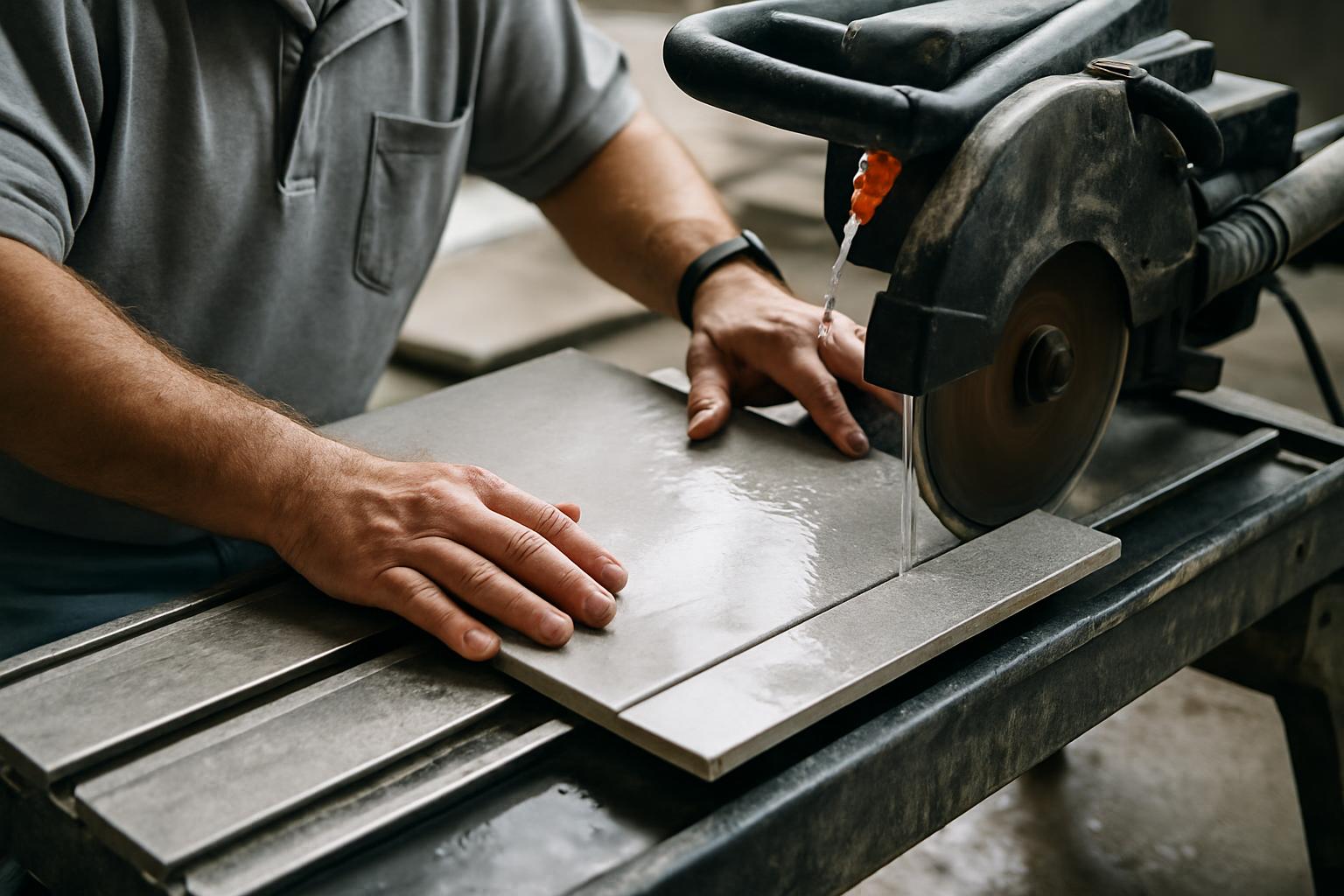
Porcelain chips fast when the wrong rim goes on the saw, especially on glazed tile with a brittle face. Wet cutting with a continuous rim keeps the edge cleaner and the blade temperature under control.
Author Ms Zulfa Salie keeps the voice practical. No tapestry metaphors. No robust seamless filler. Just the check that saves a board when Highveld dust or coastal humidity shows up mid-shift.
Check this before the first cut, not after a box is spoiled. Check that water reaches both sides of the rim, then make one test pass on a spare tile from the same batch. Porcelain from different cartons can vary more than the label suggests, particularly between polished and matte stock.
Read the related blade path with the material path before setting depth and feed speed. For porcelain, the kerf note matters most when the installer wants tight joints, exposed edges, or mitres that must meet cleanly. If you send details through our contact form, include tile size, thickness, and whether the face is glazed, polished, or textured.
Johannesburg dust can block nozzles and leave a blade running half dry without the operator noticing it at once. Durban humidity does the opposite problem on stored stock, where carton moisture and surface condensation can affect marking and handling before cutting starts. Keep the tray clean, keep the pump clear, and do not assume yesterday's water flow is still acceptable today.
If your tile behaves differently, compare body density, face coating, and edge finish before changing the whole setup. Some imported porcelain marked for wall use cuts easier than dense rectified floor tile. See more under Kerfs when the stock family changes.
Start with a dressing pass if the rim glazed over on the previous job. Make the first full cut slowly enough that the water stays in the kerf and the motor note remains even. In Kya Sands workshops, that first tile often tells you whether the batch will tolerate a normal feed or needs a gentler hand at the last 30 mm.
Coastal teams usually watch slurry build-up sooner because wet paste can hide a dull rim. Highveld shops tend to clean more often because fine dust settles into guides, trays, and pump strainers. On site, large format porcelain often needs extra support at the offcut side so the corner does not snap near the end of the pass.
When you use our contact form, send the city, tile dimensions, and the cut type you need. A straight rip on 8 mm glazed porcelain is not the same setup as a 45 degree mitre on 12 mm rectified stock. Include the machine size as well if you want the blade choice to match the saw properly.
A wet porcelain note cannot stand in for glass, granite, or sintered stone, even when the surface finish looks similar. Open a different note once the material body changes or when the crew moves from straight cuts to mitres.
For porcelain queries, include tile size, edge type, and saw model in our contact form. Kya Sands, Johannesburg can then match the wet-cut note to the right blade and flag common issues like edge chipping, feed speed, or poor water reach at the rim.
Verified Google reviews